How to Take Care of Your Suede Bottom Dance Shoes
Taking care of the suede bottoms of your dance shoes is an important part of maintaining the longevity of your equipment. While shoes do eventually wear out, you can extend the life of your shoes so you can go longer without replacing them. This article will guide you through the most important aspects of shoe care to keep you safe and ready for a good time on the dance floor.
Where to Wear Suede Bottom Shoes
Suede bottom shoes are specifically designed for hardwood dance floors, though they are also fine to wear on non-abrasive indoor surfaces like vinyl, tile, or carpet. Even in the best conditions, suede fibers easily pick up dust and debris and hold onto moisture. Where you wear your dance shoes matter to minimize matting the suede in the first place.
Only wear your shoes indoors. Avoid stepping in any sort of moisture, as any wetness can matte down the suede and the material will quickly lose its fibrous textures. Avoid wearing your shoes where moisture is present, such as in bathrooms or at the doors of the building where mud, snow, and water can be tracked in.
If you wear your shoes outside, pavement and gravel will tear at the suede. Dirt and grass will matte down the suede fibers, or embed pebbles or small stones in the soft material.
How to Properly Store Suede Bottom Dance Shoes
Most shoes brands will include a cloth shoe bag when you purchase shoes from them to store your shoes in when you’re not dancing. Be sure to carry your shoes in this bag when your outside to protect the suede bottoms from the elements.
When storing your shoes while not in use, avoid storing them in extreme temperatures as the heat or cold can warp or damage the materials of the shoes. Store your shoes in a dry, well-ventilated space.
How to Restore the Suede
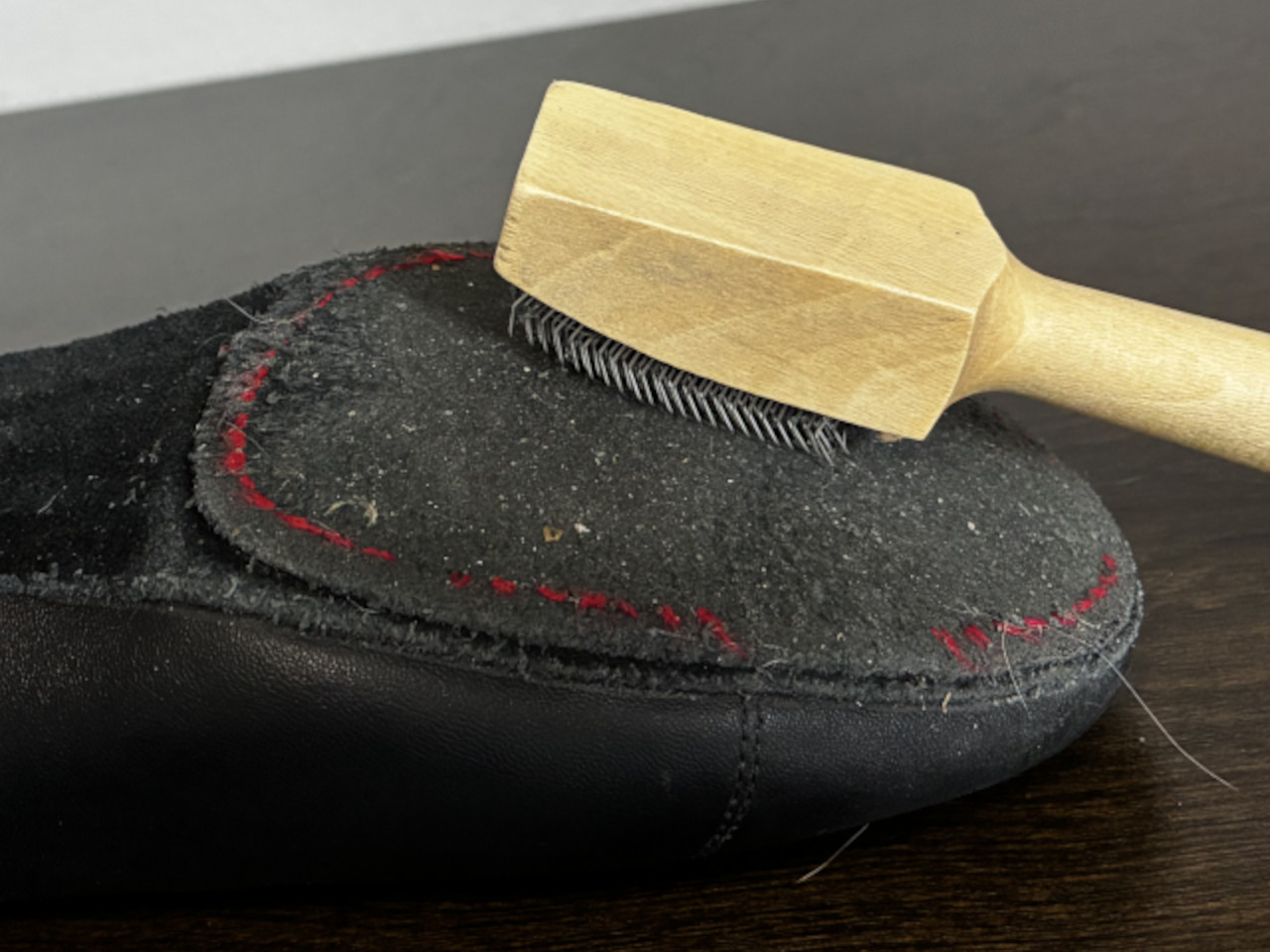
Even if you only dance indoors and on dry, non-abrasive surfaces, the suede will pick up dust, dirt, floor wax, and other debris and become matted. The fibers will become a smooth surface that can put you at risk of slipping and injuring yourself. To restore the suede and keep you safe, you will need a metal bristle suede brush, like the one pictured above. You will use this brush to scrape away the debris on the suede and restore its fibrous texture.
How to Brush Your Shoes Correctly
To restore the natural fibrous texture of the suede:
- Scrape the Debris: Press the metal bristles of the brush into suede and pull the brush across the suede. As you pull the bristles across the suede, you will see dust and debris be scraped off.
- The Direction: It doesn’t matter which direction you brush the shoe, as long as you are brushing against the bend of the wire bristles to ensure they are digging into the material.
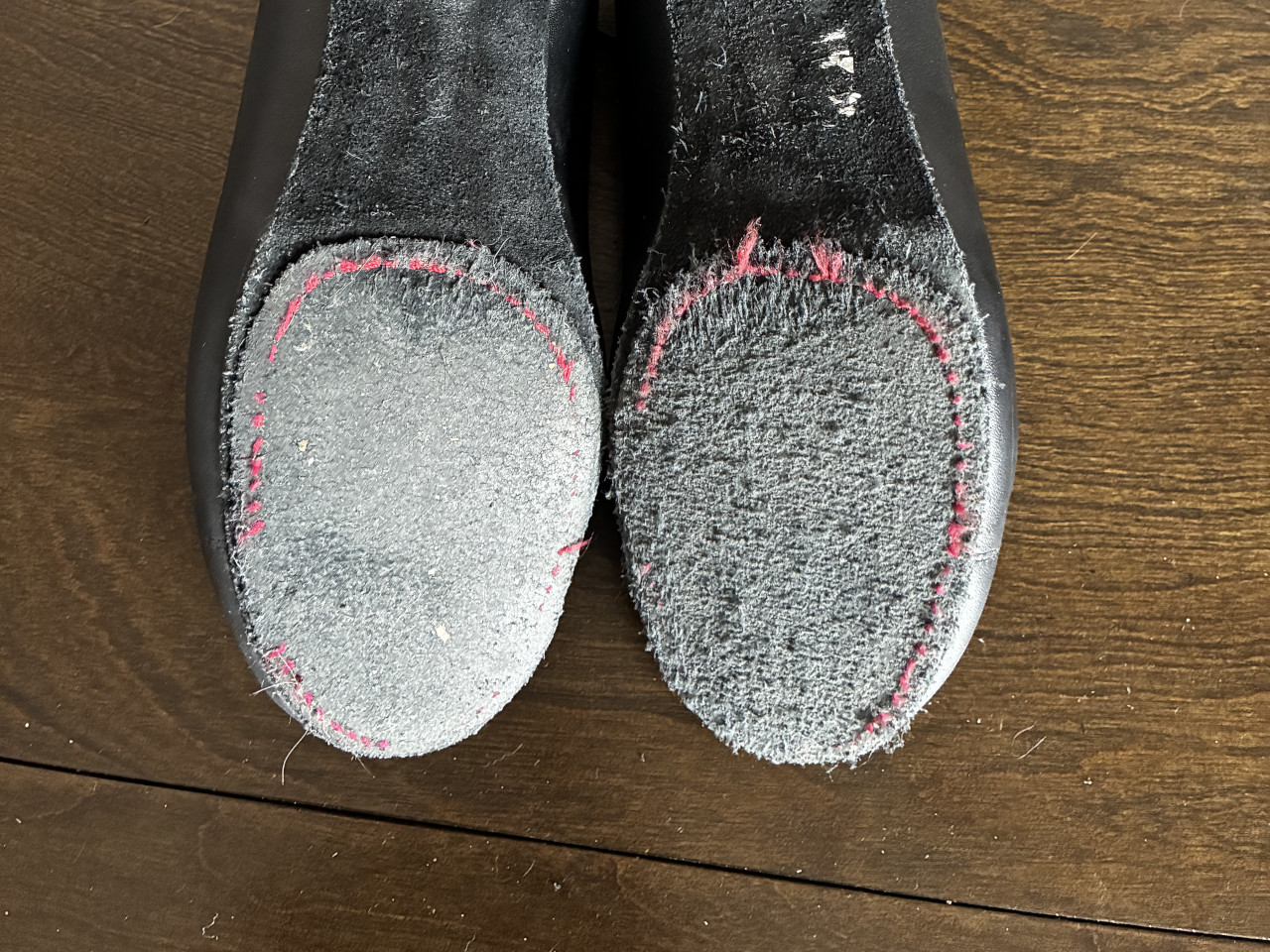
- The Goal: You will not be able to fully restore the original texture of the suede with this method. However, you will be able to remove the layer of accumulated dust and debris and restore a fuzzy texture to the suede.
The image below shows the before and after comparison of brushed suede. The shoe on the left has collected dust and debris, resulting in the matted suede. The shoe on the right is the suede after it has been brushed, restoring a fuzzy texture.
How Often You Should Brush Your Shoes
There isn’t a set frequency of when or how often you should brush your shoes. Instead, when you feel your shoes slipping as you take a step or turn, you will know it’s time to brush your shoes. Generally, if you’re only hitting the dance floor once a week, brushing every few weeks is usually plenty. If you’re dancing multiple times a week, you may find yourself brushing once a week.
Caution: Don’t over-brush! While brushing is necessary to restore the suede, don’t go overboard. Every time you brush, you remove a little bit of suede. If you brush too aggressively or too often, you’ll eventually brush away all the suede, leaving the material underneath exposed.
Don’t have a shoe brush? Pick one up on Amazon for less than $10.
What to Do When the Suede Wears Thin
Even if you only wear your shoes in the right places, and brush your shoes only when they become slippery, suede eventually wears thin. If you’ve brushed your shoes and the suede doesn’t feel fuzzy, then you’ll know the suede has been used up. The good news is you don’t necessarily need to throw the whole pair away and buy a new pair of shoes.
If the upper part of the shoe still fits and looks great, you can resuede the bottoms. You can find DIY resueding kits online or take them to a local shoe repair shop to have a fresh layer of suede professionally glued to the soles. Resueding your shoes is often cheaper than buying a new pair of shoes, and you can keep your favorite pair of shoes a little while longer.
Affiliate Disclosure: Dancewear Labs uses affiliate links. When you make a purchasing using one of our links, we earn a small commission at no additional cost to you.