The 5 Types of Shoe Straps
When deciding what shoes you’re going to buy, an important consideration is the type of strap on the shoe. The style of dance you practice and your skill level will directly impact which straps are best suited for you. Further, how the straps are secured to the shoe, the fastener, and even the materials will directly impact how long the shoe lasts and how secure you feel when wearing them. This article will walk you through the five types of straps and the additional design features that will ensure you will invest in the best shoe for the best fit.
The Five Types of Straps
1. The Ankle Strap
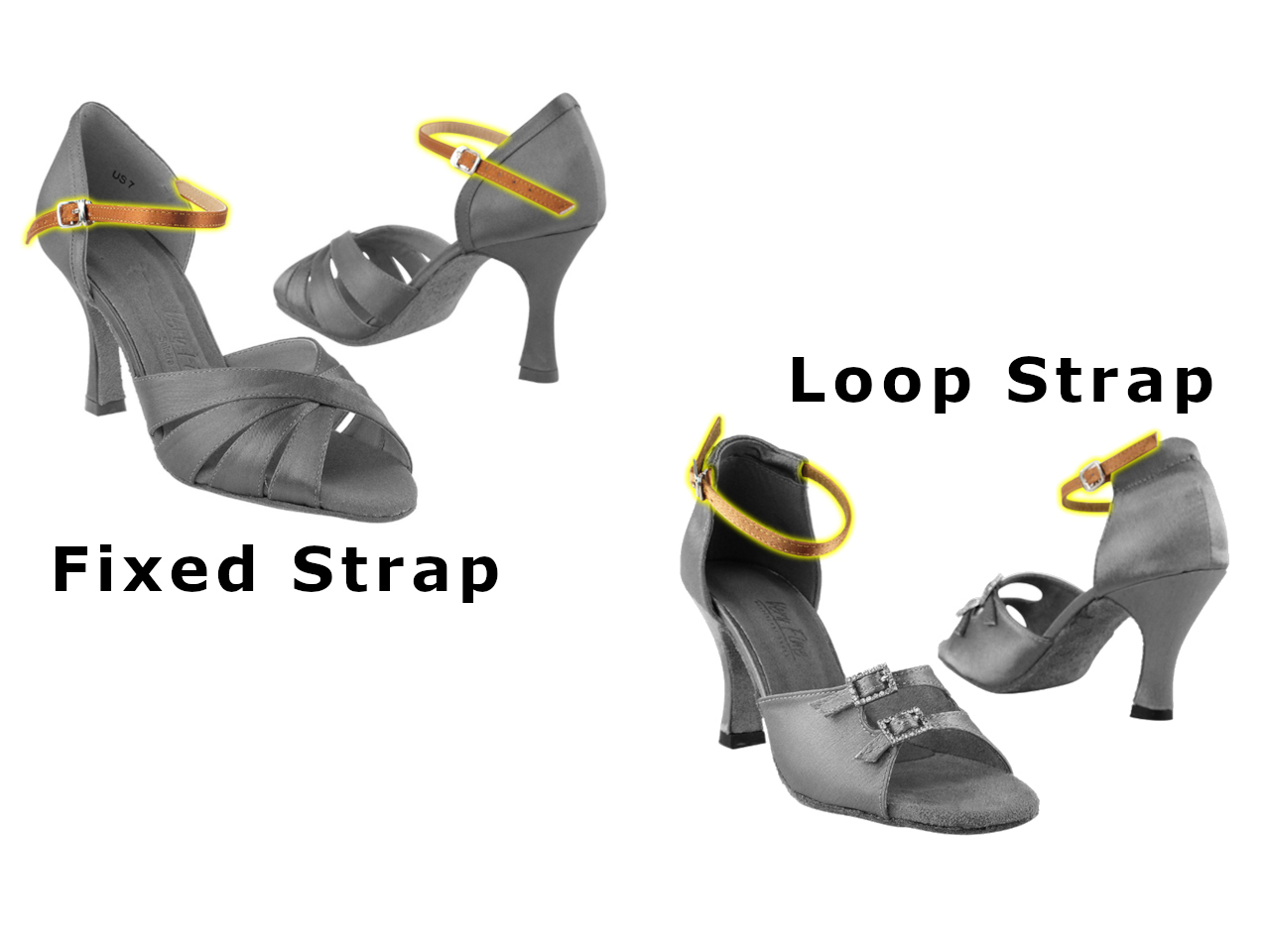
Ankle straps are the most common strap for women’s dress shoes and sandals. They are also the strap of choice for standard and smooth styles of dance. Since the strap sits on the ankle, the strap acts as a tether more than an anchor and only really secures the heel. This is good for smooth and standard styles of dance as they often feature heel leads and turns. By tethering to the heel, a single strap design complements the closed-toe design for smooth shoes.
Because an ankle strap does not cinch the shoe to the foot, there is little support or security that this strap provides. A dancer must rely on the muscles in their feet to provide the support necessary to wear ankle straps. As such, ankle straps are best suited for advanced dancers who have developed those muscles.
Stylistically, an ankle strap provides for an unbroken line across the top of the foot. On the competition floor, an unbroken line allows for judges to evaluate clean footwork and technique.
- Fixed Variation: The strap is anchored directly to the sides of the heel cup, allowing for a forgiving fit at the expense of stretching the material.
- Loop Variation: The strap is threaded around or through the back of the heel cup, preserving the material of the heel cup, but less forgiving in the fit.
For a deep dive into how these two variations affect the lifespan and fit of your shoe, see the “Strap Design Features” section below.
2. The T-Strap
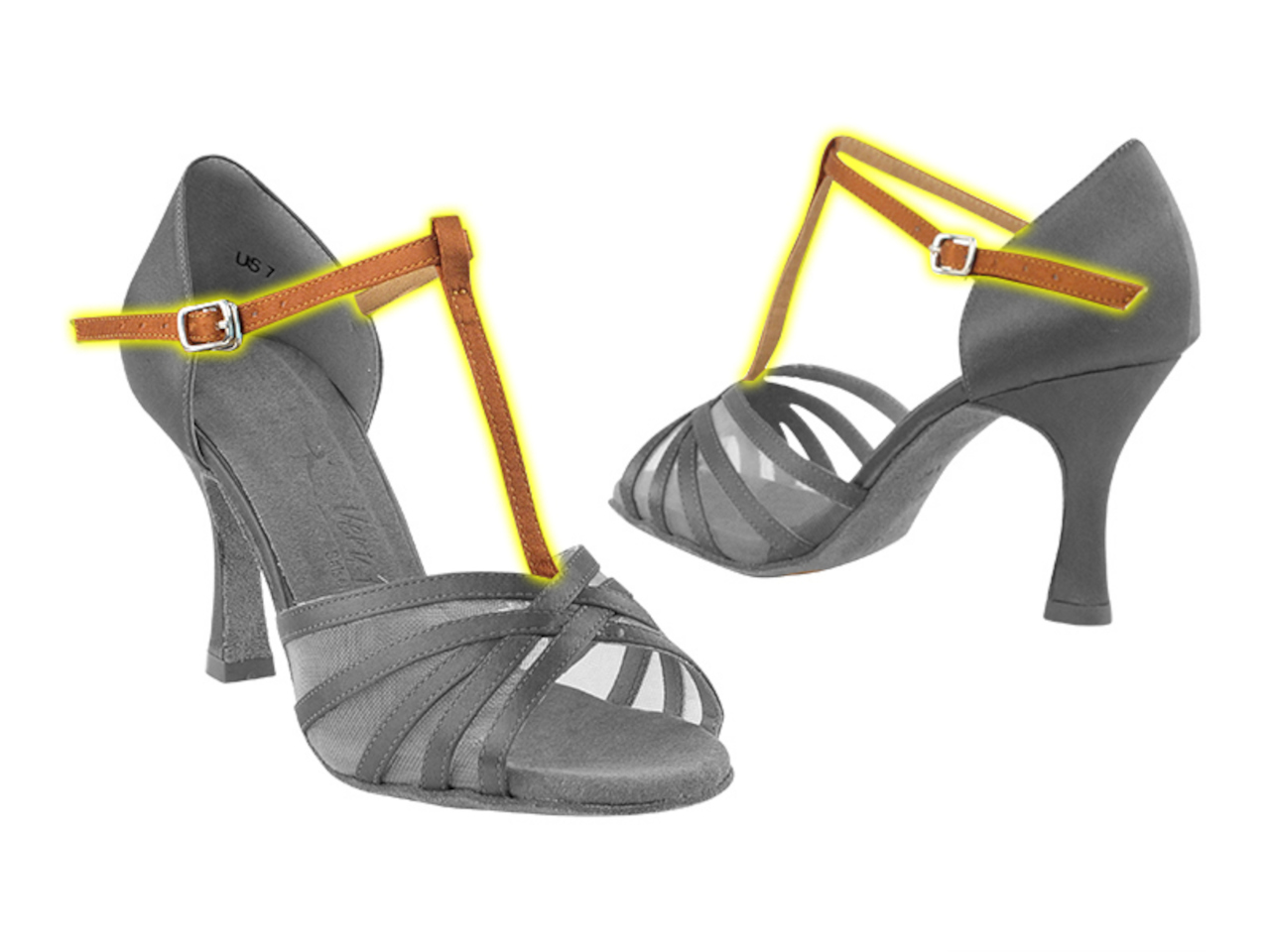
A T-Strap is an additional strap on shoes with an ankle strap. The additional strap is anchored to the top of the toe box and runs along the top of the foot to loop around the ankle strap. The additional strap pulls the toe box up the foot to ensure a secure fit around the ball of the foot. This is especially important for toe points and other stylizations that cause the foot to arch; common in rhythm and latin dances. The additional strap pulls the toe box tight, keeping it flush against the ball of the dancer’s foot, which helps prevent slippage.
However, the design of the T-Strap inevitably stretches material across the top of toe box. Since this strap doesn’t have a buckle or other mechanism to adjust, the toe box and strap will stretch, and become looser over time. This is exacerbated by the ankle strap, which cannot help compensate for the stretching.
Stylistically, a T-Strap creates a visual line running along the length of the foot, making the dancer’s foot appear to be longer. This is beneficial on the competition floor where the foot stretches to create stylizations.
3. The X-Strap Across the Ankle
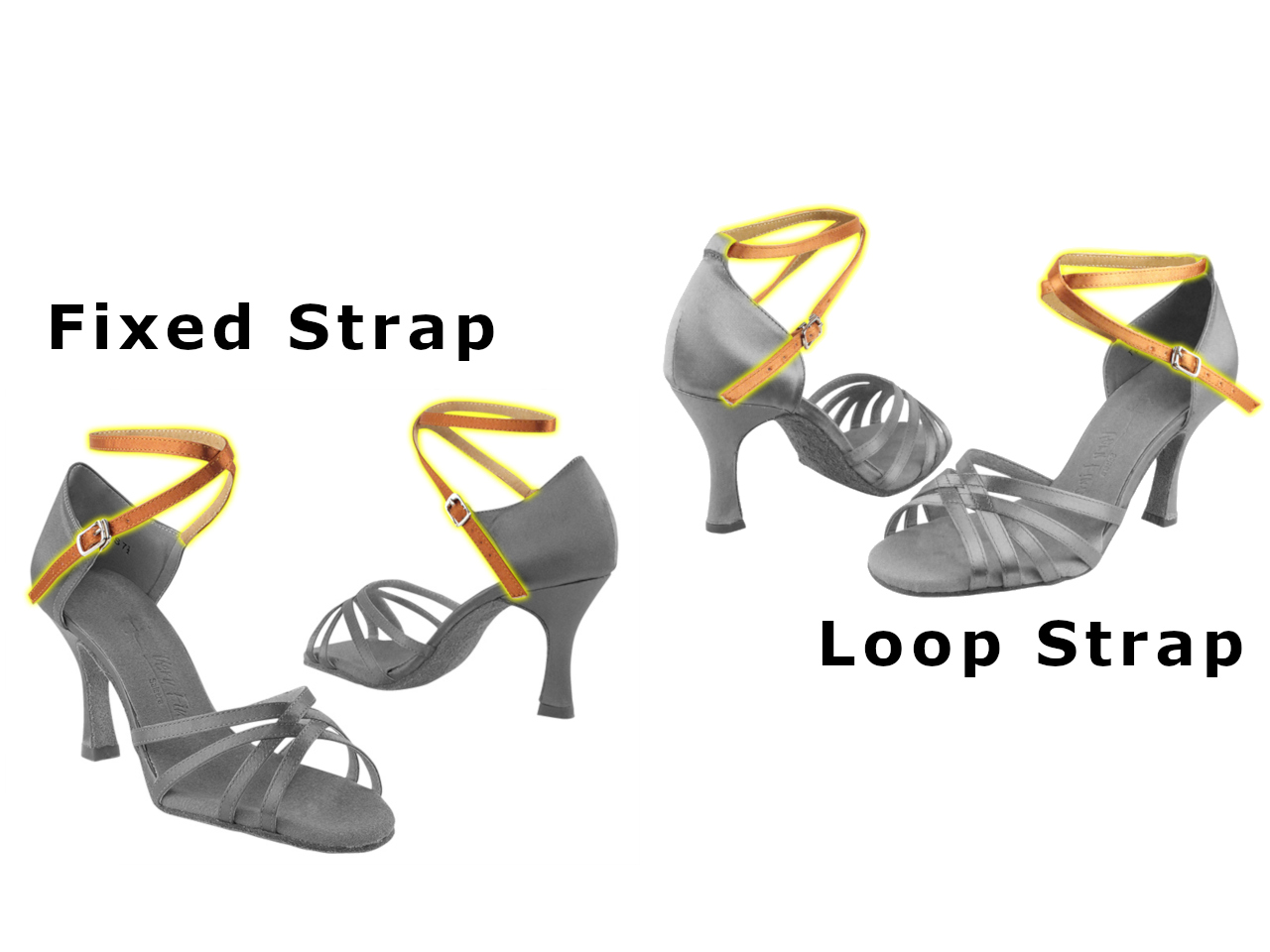
An X-Strap is where the strap loops around the ankle or foot twice, creating the “X” where the loops cross. For X-Straps across the ankle, the straps act more like a seat belt for the ankle, providing more security and stability than a more tether-like single ankle strap.
Further, the X-Strap is beneficial for dancers with narrower feet. A single ankle strap doesn’t allow for much tightening across the width of the heel. Because of this, the X-Strap allows for cinching the heel cup to the dancer’s heel, making a snug fit more accessible than a single ankle strap.
X-Straps are particularly well suited for latin styles of dance. The heel cup is secured to the dancer’s foot, but the arch and toe are free for the many toe leads, points, and stylizations for latin dances. Intermediate dancers may be drawn to this style of strap because they have developed many of the muscles in their feet to support themselves, but still rely on the shoe to supplement the support.
- Fixed Variation: The strap is anchored directly to the sides of the heel cup and wraps around the ankle freely, resulting in a less secure fit.
- Loop Variation: The strap is anchored directly to the sides of the heel cup, but the loop is threaded through a loop fastened to the back of the heel cup, resulting in slightly more secure fit.
For a deep dive into how these two variations affect the lifespan and fit of your shoe, see the “Strap Design Features” section below.
4. The X-Strap Over the Foot
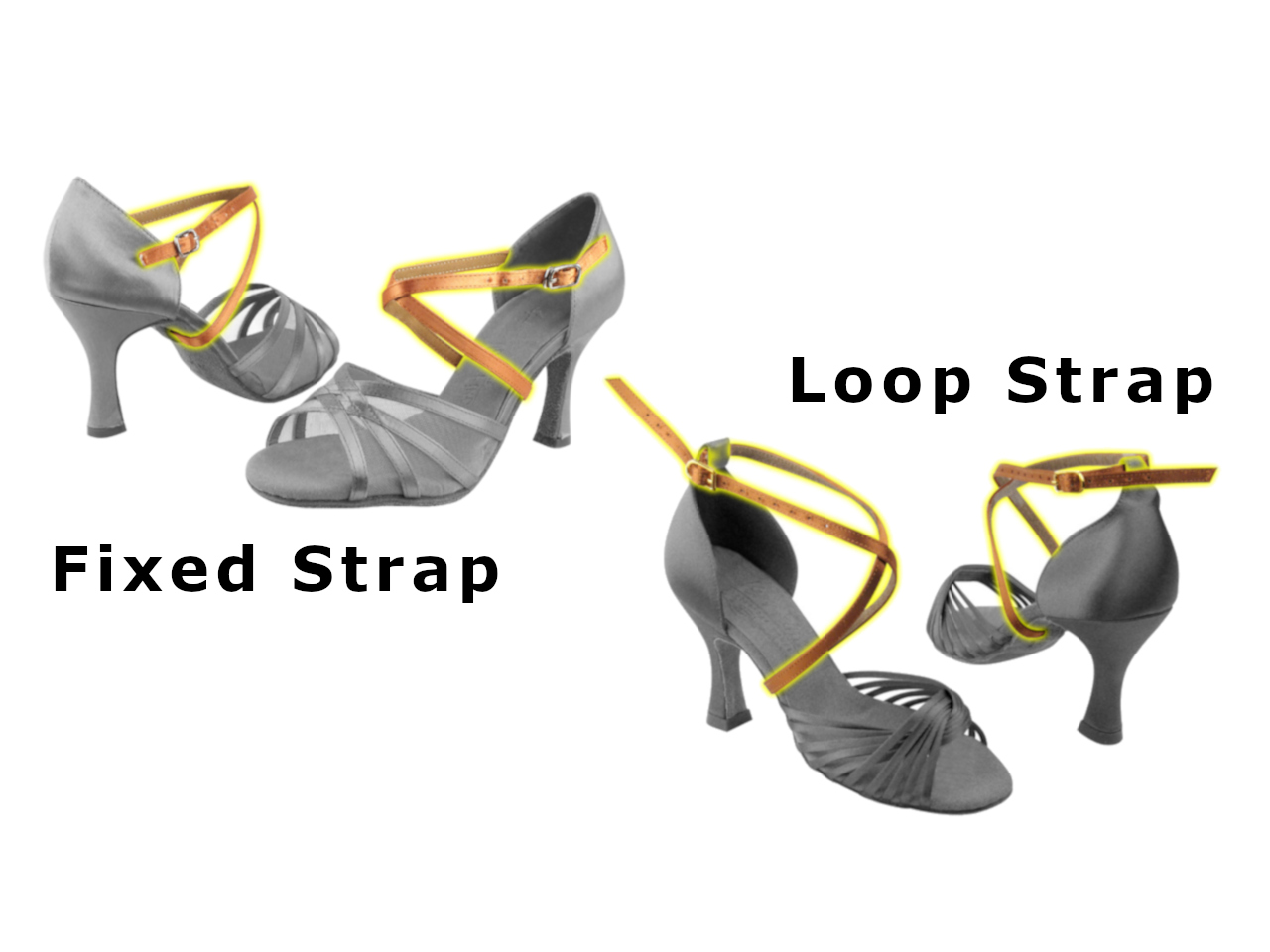
An X-Strap across the top of the foot, instead of across the ankle, shifts the security from the heel of the foot to the arch. Instead of the strap securing or looping exclusively through the heel cup, the strap wraps around the middle of the foot to cinch the sole of the shoe to the dancer’s arch. If the shoe is a split sole – the shoe has a short shank that connects to heel, but not ball of the shoe – then an X-Strap over the foot provides additional support that the short shank is lacking.
This style of strap is also beneficial for stylizations where toe points or heel lifts arch the foot away from the sole of the shoe, creating a gap between foot and shoe. By cinching the sole of the shoe to the dancer’s arch, the sole is brought with the foot during foot articulations, eliminating the resulting gap between arch and sole.
This style of strap is best suited for beginner to intermediate dancers. The straps provide support for the foot, leaving the ankle free to articulate. More advanced dancers may become frustrated because the straps across the foot do restrict more advanced technique and foot articulations.
- Fixed Variation: The strap is anchored directly to the sides of the heel cup, crosses over the top of the foot, and loops underneath or through the sole of the shoe, creating a secure and snug fit.
- Loop Variation: The strap is threaded through a loop fixed to the back of the heel cup, wraps around the ankle and crosses itself over the top of the foot, and loops underneath or through the sole of the shoe. This variation is less secure than the fixed variation.
For a deep dive into how these two variations affect the lifespan and fit of your shoe, see the “Strap Design Features” section below.
5. Double X-Strap
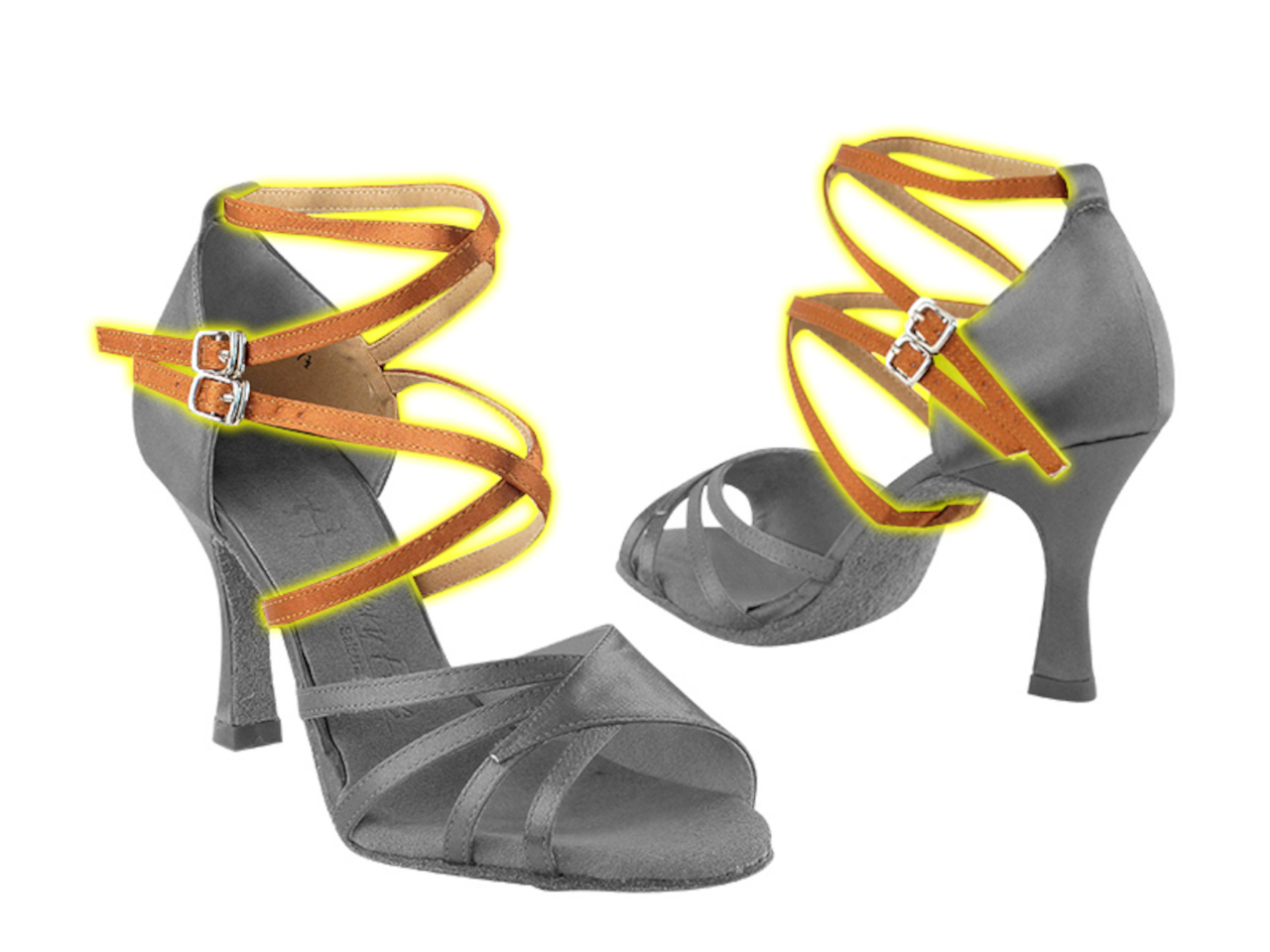
The double X-Strap has two straps: a fixed arch variation and an ankle loop variation. Both straps are fixed to the cup with one strap securing the ankle and the other securing the arch. This style of strap is best suited for beginner dancers who have not yet developed the foot muscles to support themselves. Both the arch support and ankle security provide new dancers with plenty of support while providing the added benefit of more forgiving sizing options. Both straps can be used to cinch the heel cup and sole of the shoe to the foot to accommodate smaller or narrower feet. A double X-Strap reduces flexibility and foot articulation required for more advanced moves and technique. This is a non-issue for the new dancer.
Strap Design Features
Fixed vs Loop Straps Impact Fit
How the strap connects to the heel cup is an important design factor for the longevity of the shoe. Whether the strap is fixed to the shoe, or threaded through a loop, each has tradeoffs for the fit of the shoe as well.
Fixed Straps
Fixed straps are sewn to the sides of the heel cup. When pulling straps tight, the sides of the heel cup are also pulled. Dancers with narrower feet benefit from this since the heel can be cinched to the back of the foot. However, pulling the heel cup tight also stretches the heel cup and places strain on the stitching between the material at the back of the shoe and the heel. Cinching the strap tighter can give more life to stretched material, though this can lead to further stretching. Fixed straps are a benefit to the overall fit of the shoe, but at the cost of a shorter lifespan for the shoe.
Loop Straps
Loop straps are connected to the heel cup by threading through a loop or channel on the rim of the cup. Similar to a drawstring bag, pulling the strap tighter closes the rim of the heel cup around the back of the foot, but doesn’t cinch it down like a fixed strap. As a result, there is little room for error with the fit when it comes to sizing. Because tightening the strap doesn’t stretch the material of the heel cup, the shoe can last considerably longer than fixed strap designs. Further, when the strap stretches, the loop design makes it easy to replace the strap by simply threading through a new strap.
Fastener Types Impact Support
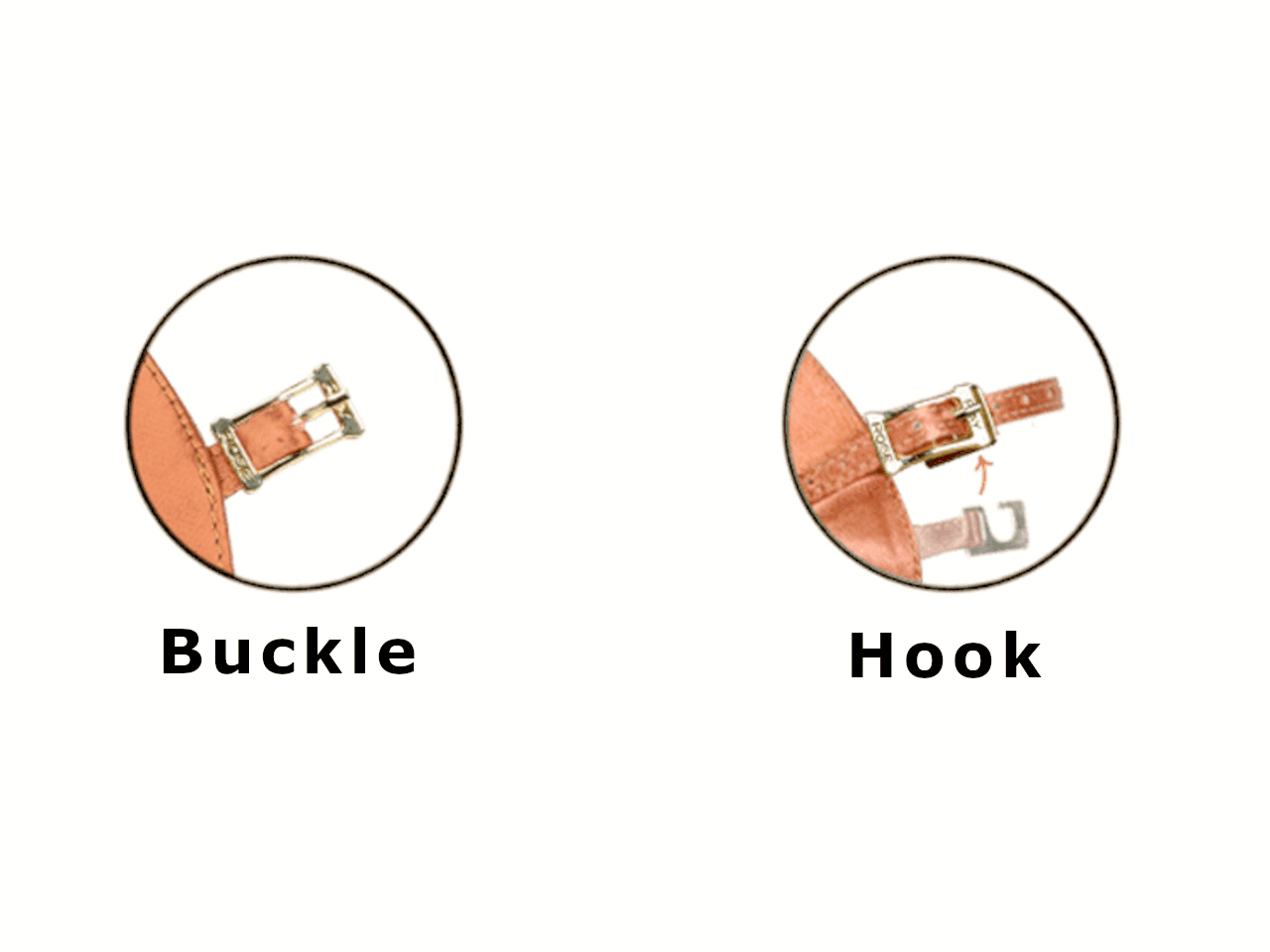
How the strap is fastened is important for the longevity and utility of the strap. A traditional buckle is elegant and secure, but runs the risk of tearing the strap. A quick release hook is functional, but becomes less secure when the strap stretches.
Traditional Buckle
A traditional buckle is the more secure of the two fastener types. The strap is threaded through the buckle and secured by a pin through one of many holes punched in the strap. Because the strap is buckled and unbuckled each session, the strap suffers from bending, pulling, and twisting, and therefore has a higher likelyhood of becoming damaged and tearing. As long as the strap is properly pulled tight, the buckle can be the more secure option. This can be mitigated somewhat by the material, as explored below.
Quick Release Hook
A quick release hook utilizes a buckle to tighten the strap and a hook to fasten the strap down. A hook system is a more convenient fastener as the buckle can be placed along the strap at the perfect position, then fastened by the hook quickly. Because the strap isn’t buckled and unbuckled each session, the strap suffers much less damage when compared to the traditional buckle. However, because the strap is still pulled tight, the material will stretch. If the strap becomes too loose, there is a small chance that strap may slip off the loop. When the material stretches, the buckle can be placed further down the strap to ensure the fit remains tight. The quick release hook provides longevity and function at the minimal expense to security.
Pro Tip if you run out of holes on the strap to continue tightening the fit, you can punch new holes with a leather punch.
Strap Material Impacts Longevity
Because straps are pulled tight to achieve a snug and secure fit, the material the straps are made of will impact the useful life of the strap.
Leather
Leather is the standard material for straps. Because it is a material derived from animal hides, the material naturally stretches when exposed to heat and moisture. As leather stretches, the elongation becomes the new norm for the material. Because of this, the leather needs to be stretched further to retain its tightness, further stretching the material. The more the strap is pulled, the less effective the leather will become at staying tight.
Satin
Natural satin offers very little stretch. However, a satin blend may have varying degrees of stretch. Depending on the blend, the elasticity of the material will make it want to return to its original shape. Elasticity is a consumable part of the strap, meaning as the satin is pulled, the less elasticity it will have over time. An added benefit of satin over leather is that it tends to have a smooth finish. A smooth finish is helpful for straps to rub against each other with low friction, such as in smooth dances where passing feet is common.
Patent
Patent is a finish for leather. This finish is high gloss and high friction. Because it’s a finish, patent tends to be rigid. This can be helpful for the longevity of the strap since stretching tends to be minimal. However, because the material is high friction, when straps rub together, it may feel like they’re catching, making patent inideal for smooth styles of dance.
Width
The width of the strap is important to the usefulness of the strap as well. A thick strap is more resistant to stretching, relative to the material. Further, a wide strap can distribute pressure caused by tightening more evenly across the foot, making it more comfortable. In contrast, a thinner strap looks elegant, and may even appear to vanish against the dancer’s skin. However, a thinner strap is more prone to stretching than a thicker strap, and may also be painful because there is less surface area to distribute pressure from pulling the strap tight.
Securing the Strap
In this article, you learned about the five types of shoe straps: the ankle strap, the T-Strap, both varieties of the X-Strap, and the Double X-Strap. You also learned about how fixed and loop straps differ and the impact they have on the fit of your shoe. Further, the fastener design and material similarly impact the support and longevity of the shoe. You are now well prepared to invest in the best shoe for the best fit.
Affiliate Disclosure: Dancewear Labs uses affiliate links. When you make a purchasing using one of our links, we earn a small commission at no additional cost to you.