The 3 Styles of Toe Boxes on Men's Ballroom Shoes
For all styles of ballroom dance, from smooth to rhythm to latin, the toe box is an important part of ballroom shoes. All men’s ballroom shoes are closed toe, but feature one of several designs, each with their own strengths and weaknesses. In this article, you will learn about the three major designs, and how they impact your dancing.
Seams and Stitching
Before exploring the three styles of toe boxes, a brief discussion on the seams and stitching of a shoe is important to understand the strengths and weaknesses of each design. The strongest points of a shoe will be along the seams. Seams are strong because the stitching acts as a reinforcement against stretching. Some shoes will also have multiple layers of material beneath the stitching. When there are multiple layers of material, stretching is reduced since each layer provides its own resistance. Seams also provide a natural place for the shoe to bend, as any folding or twisting of the material stops at a seam.
The Three Types of Toe Box
There are three types of toe box. A toe cap, a wingtip, and the wholecut. A toe cap is the ideal shoe for beginners and for smooth and standard styles of dance. A wingtip is great for all styles of dance, especially when out social dancing. A wholecut shoe is the perfect shoe for advanced latin and rhythm dancers. Just what makes each toe box a good choice for different dancers and styles is explored below.
Toe Cap
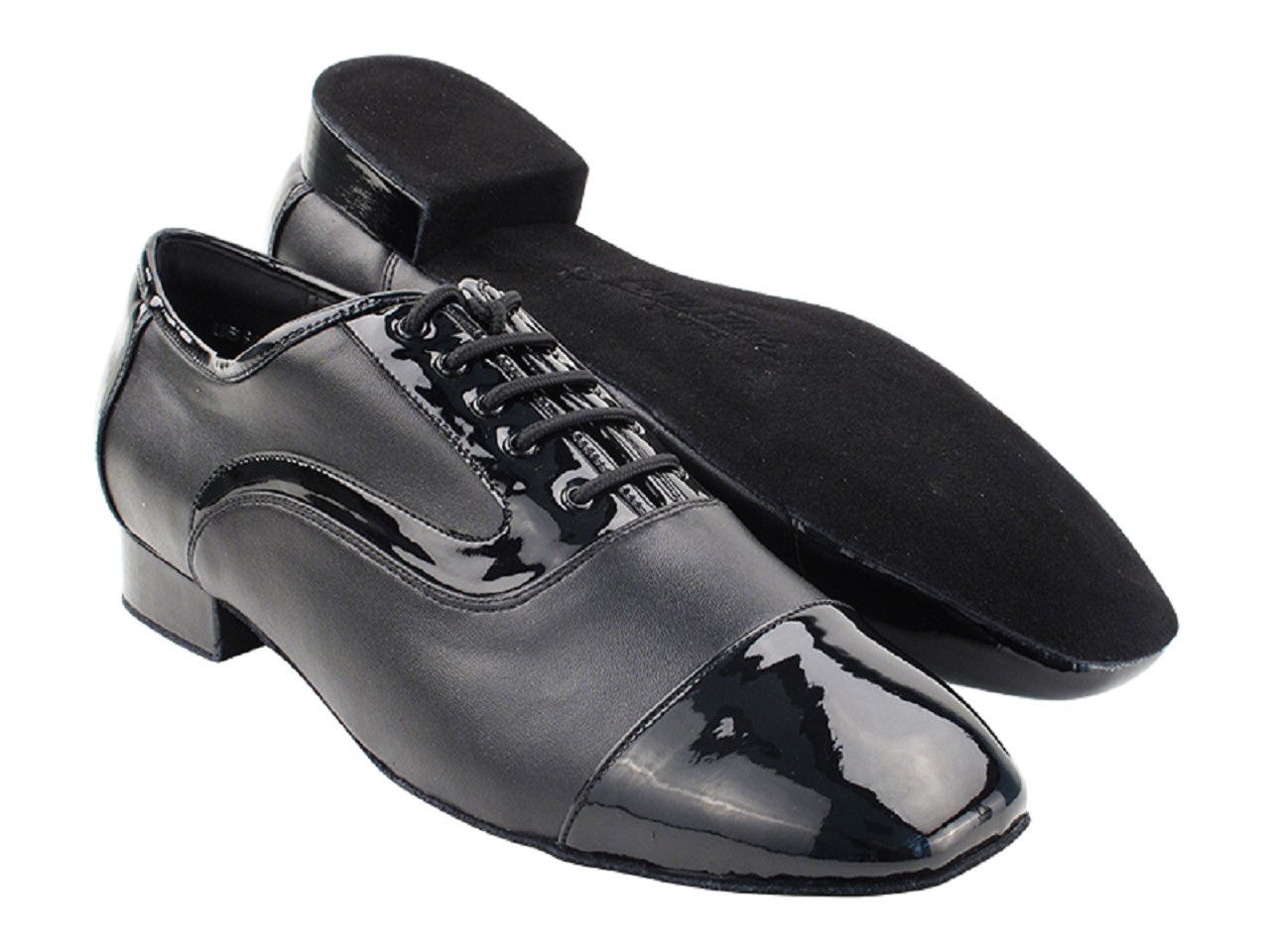
A toe cap design is the most classic design for smooth and standard ballroom dances. This design covers the toes and is fastened to the upper shoes by a seam that runs straight across the top of the foot from one side of the shoe to the other. This design is called a toe cap because the resulting design appears to “cap” the toes.
The toe cap is the least forgiving of the toe box designs. The placement of the seam creates a hinge-like break in the shoe line, which breaks the visual line of latin and rhythm styles of dance on the competition floor.
The stability of this design is beneficial to beginners, who have not yet developed their feet muscles for complicated moves. Advanced dancers may become frustrated by the resistance of the seam, which prevents spreading the ball of the foot for maximum connection to the floor.
The placement of the seam on a toe cap design is right where the shoe experiences the most pressure. When a dancer places weight onto the ball of their foot, their foot spreads outwards, pressing into the sides of the toe box. The seam provides resistance to this pressure. As a result, the toe cap design provides more support for the dancer.
While a toe cap design provides more support, the resistance to stretching results in a longer break-in period for the shoe. This toe box design can be painful, especially for wider feet. However, once the shoe is broken in, the shoe will last longer than the other two designs.
Wingtip
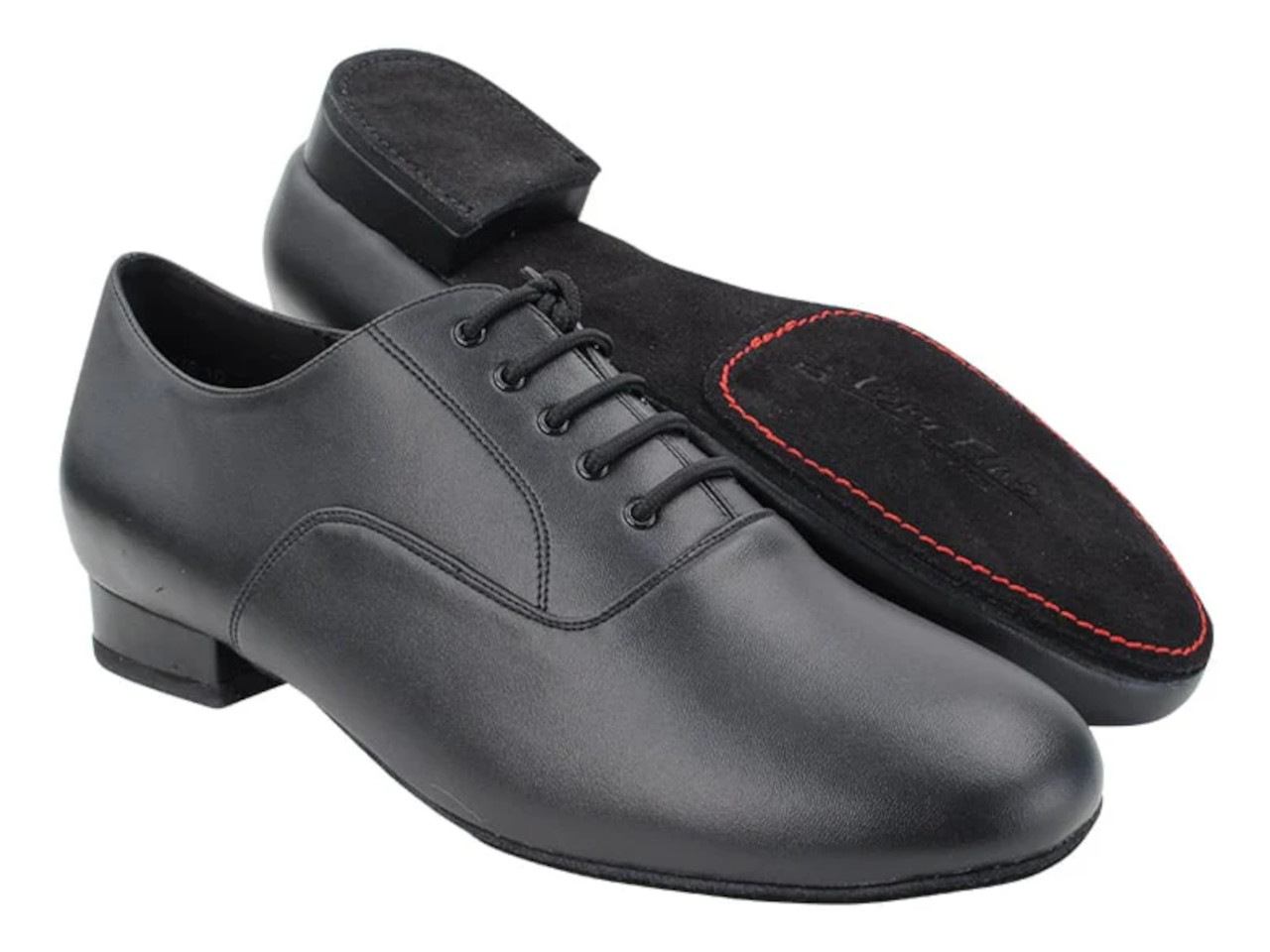
The wingtip is the all-styles toe box design, ideal for social dancing. Visually, the seam extends the toe box down the sides of the shoe. The seam for this design begins near the heel, moves up the side of the foot before turning towards the toes and meets in the middle over the ball of the foot. The extra material on the sides are the “wings” of this design, leading to the name.
Of the three toe designs, this style resists twisting during powerful steps or pivots. Because wingtip shoes may be fastened directly to the heel cup, they are securely anchored. Further, the wingtip is often placed over other layers of material, introducing multiple levels of resistance against twisting. The placement of the seam along the sides of the shoe distributes the pressure and twisting across the whole shoe, which helps with stability during steps and patterns.
Shoes featuring the wingtip design are more forgiving during their break in period. Because the seam doesn’t cross the foot where there’s the greatest amount of pressure, the toe box can stretch more easily. This is great for dancers with wider feet, who would otherwise find the toe cap design painful.
Though the extra material along the sides of the shoe is a benefit for breaking in dance shoes, it is also a limiter for the longevity of the shoe. Wingtip shoes will experience more stretching, both along the length of the shoe and across the width of the toe box.
Wholecut
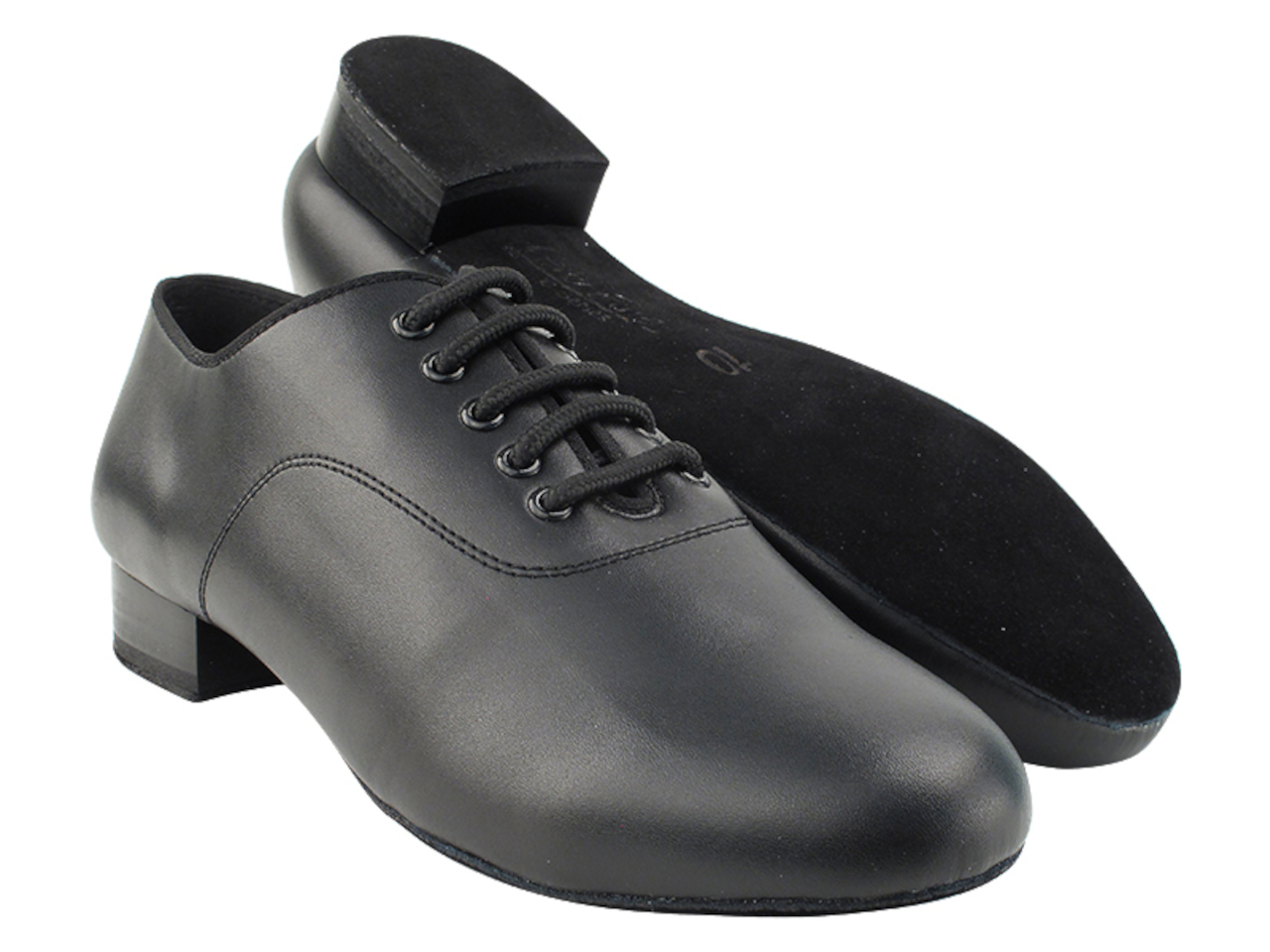
A wholecut shoe is actually just the absence of a distinct toe box. There is only one seam on the shoe, which runs vertically from the bottom of the shoe to the rim at the back of the heel. The rest of the upper shoe is made from a single piece of material. Some designs, like the one shown in the image above, may have additional stitching throughout the upper shoe, but this stitching is not a seam between separate pieces of material.
This design is stylistically the most sleek of the three. As there are no seams to influence how the leather stretches, it can stretch in every direction. This is beneficial for individuals with wide or oddly shaped feet. The leather can stretch and mold to perfectly match the unique shape of the foot. This is where the term “second skin” comes from for these types of shoes. The flexibility and freedom these styles of shoes provide are ideal for rhythm and latin styles of dance, and can lend itself to executing complicated moves on the dance floor.
While these types of shoes are fantastic for a quick break-in, they won’t last as long as shoes with structure and rigidity provided by multiple panels and seams. The absence of panels and seams also means that the shoe provides no support when stepping or executing moves. On one hand, this provides the maximum amount of flexibility for foot articulation. On the other, wholecut shoes require an advanced level of control and muscle development to compensate for the lack of support. Because of the advanced requirement to effectively use this shoe, beginner or intermediate dancers may be frustrated with wholecut shoes.
One thing to watch out for with wholecut shoes is when they are made out of patent leather. The lack of seams and panels means the patent can stretch quicker, resulting in cracks and other blemishes to the finish.
Conclusion
In this article, you learned about the three types of toe box. The toe cap features a single seam across the top and down the sides of the foot, providing stability at the cost of foot articulation. Wingtip shoes are more forgiving than the toe cap, though at the cost of a longer life. And finally, a wholecut shoe is ideal for the advanced dancer, acting like a second skin. Beginner or intermediate dancers will have difficulty executing dance moves without well-developed foot muscles.
Affiliate Disclosure: Dancewear Labs uses affiliate links. When you make a purchasing using one of our links, we earn a small commission at no additional cost to you.