Why Do Leather Dance Shoes Stretch
Introduction
Leather is a natural material made from either animal hide, or, in the case of vegan leather, plants or plastics. Because leather is often made from organic materials, and because organic materials are malleable, leather can stretch. However, just how much it stretches is determined by many factors, from the type of leather, the finish, to the construction of the shoe itself. When it comes to dance shoes, each of these considerations must be taken into account when you are picking out the perfect shoes for your dance.
Type of Leather
While there is more nuance than is presented below, the leather that dance shoes are made of are divided into three categories: animal hide, plant-based, and synthetic. However, the exact animal leather comes from will have different characteristics that will impact the stretch. In the same way, the organic material used to make the plant-based leather, or the exact type of synthetic leather, will have different properties. However, to understand why your leather dance shoes stretch, the general categories will tell you why your shoes stretch.
Animal Hide Leather
Leather made from animal hide is the traditional material for dance shoes. In fact, both the upper part of many dance shoes and the bottoms are made from leather. The suede bottoms to dance shoes are made from the lower layers of the animal skin, which tends to be softer and more pliable than the outer skin. The softness is what makes suede-bottom shoes a great material for sliding your foot across the dance floor.
Pro-Tip: You can extend the life of your suede bottom dance shoes by properly taking care of them. Check out our article on how to take care of your suede bottom dance shoes.
The upper part of your shoes can be made from suede, the outer layer of the animal hide, or even be patent leather, which is leather that is coated in a glossy material. While patent leather may be made from animal hide, its properties more closely match those of synthetic leather, so check out that section below to learn more about patent leather.
Because leather made from animal hide is organic, there is a natural malleability to the material. Think about your own skin; it can stretch and shrink as your body changes. Animal hide leather has the same characteristics as your own skin, which is why leather dance shoes are often referred to as your “second skin.” This type of leather has the most stretch of the three options. Suede will stretch a lot, but other animal hides will stretch considerably.
Plant-Based Leather
Leather made from plants is the most eco-friendly material for dance shoes. Depending on what the actual material is made out of will influence how much the material stretches. However, since this type of vegan leather is made from organic materials, all will naturally stretch since organic materials are malleable. Generally, plant-based leathers will stretch less than animal hide, but more than synthetic materials. The exception may be cork. Vegan leather made from cork shares some rigidity characteristics of synthetic leathers, though maintains its eco-friendly status.
Synthetic Leather
Synthetic leathers are made from plastics or similar materials. The synthetic materials are typically coatings on other fabrics to mimic the characteristics of animal hide leather. Depending on the fabric, the synthetic leather will retain some of the stretchiness of the underlying fabric. Despite this, synthetic materials lack the malleability of organic materials, such as animal hide or plant-based leathers. Because of this, there is an overall low amount of stretch from synthetic leathers.
As noted above, patent leather is made from animal-hide, but has a synthetic coating. Because of this coating, the inorganic nature of the coating means that the malleability of the underlying leather doesn’t have anywhere to stretch. As a result, there is a low amount of stretch for dance shoes made with patent leather.
Construction of the Shoe
While the materials of the upper part of the shoe is important when evaluating whether and how much a leather dance shoe will stretch, how a shoe is designed determines in what ways the leather will stretch. Specifically, a shoe made from a single piece of moulded leather will be able to stretch in all directions. However, a shoe made from multiple panels of leather will only be able to stretch in the directions that the panel is facing. This is because the seams between the panels won’t stretch nearly as much as the leather itself, if at all. Generally, the more panels and seams there are on a shoe, the less it will stretch relative to the raw material.
Single Panel Shoe Design
A shoe with a single panel that wraps around the entire upper part of the shoe will have the most amount of stretch since it can stretch in all directions. This means that over time, the shoe will feel longer, wider, and you will begin to have difficulties cinching the shoe down because the sides will have stretched upwards. When shopping for a single-panel shoe, you will want a size that is tighter than you would normally choose. While it may be uncomfortable when you first begin wearing them, they will quickly stretch to accommodate the shape and size of your foot. In fact, single panel shoes may be the most comfortable shoe once they’re broken in. However, they will continue to stretch, and the comfort will be replaced with a loose feeling, and therefore dangerous, shoe.
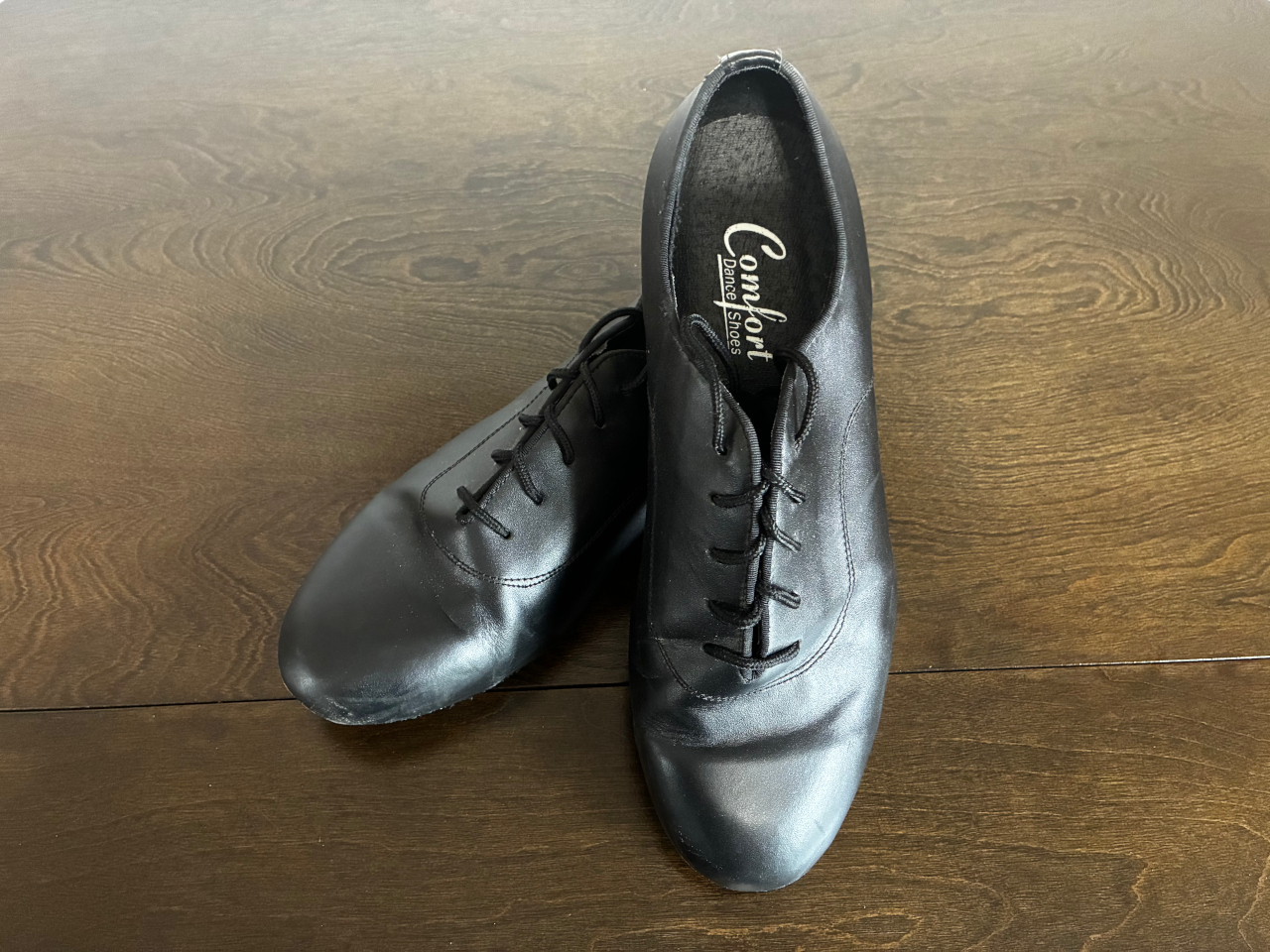
My first pair of dance shoes were a single panel design. I made the mistake of purchasing shoes that were close to my normal shoe size. As a result, once they were broken in, they didn’t last very long because they stretched too much. Even now, when they have been repurposed as general shoes for occasional use, I’m surprised every time I wear them just how loose they are. They’re looser than my foot itself, which goes to show that leather may continue to stretch even beyond the size and shape of your foot.
Multi-Panel Shoe Design
A shoe with multiple panels will behave differently depending on where the seams between the panels are placed. A vertical seam on the sides will help prevent the leather from stretching vertically, but will do little to stop the leather from stretching horizontally along the length of the shoe. Similarly, a horizontal seam will help prevent the shoe from lengthening over time.
Where the seams are placed will also impact some of the stretching characteristics of the shoes that may or may not be desirable. A seam near the toe box will prevent the toe box from expanding a whole lot. A seam near the heel will similarly prevent the heel cup from expanding.
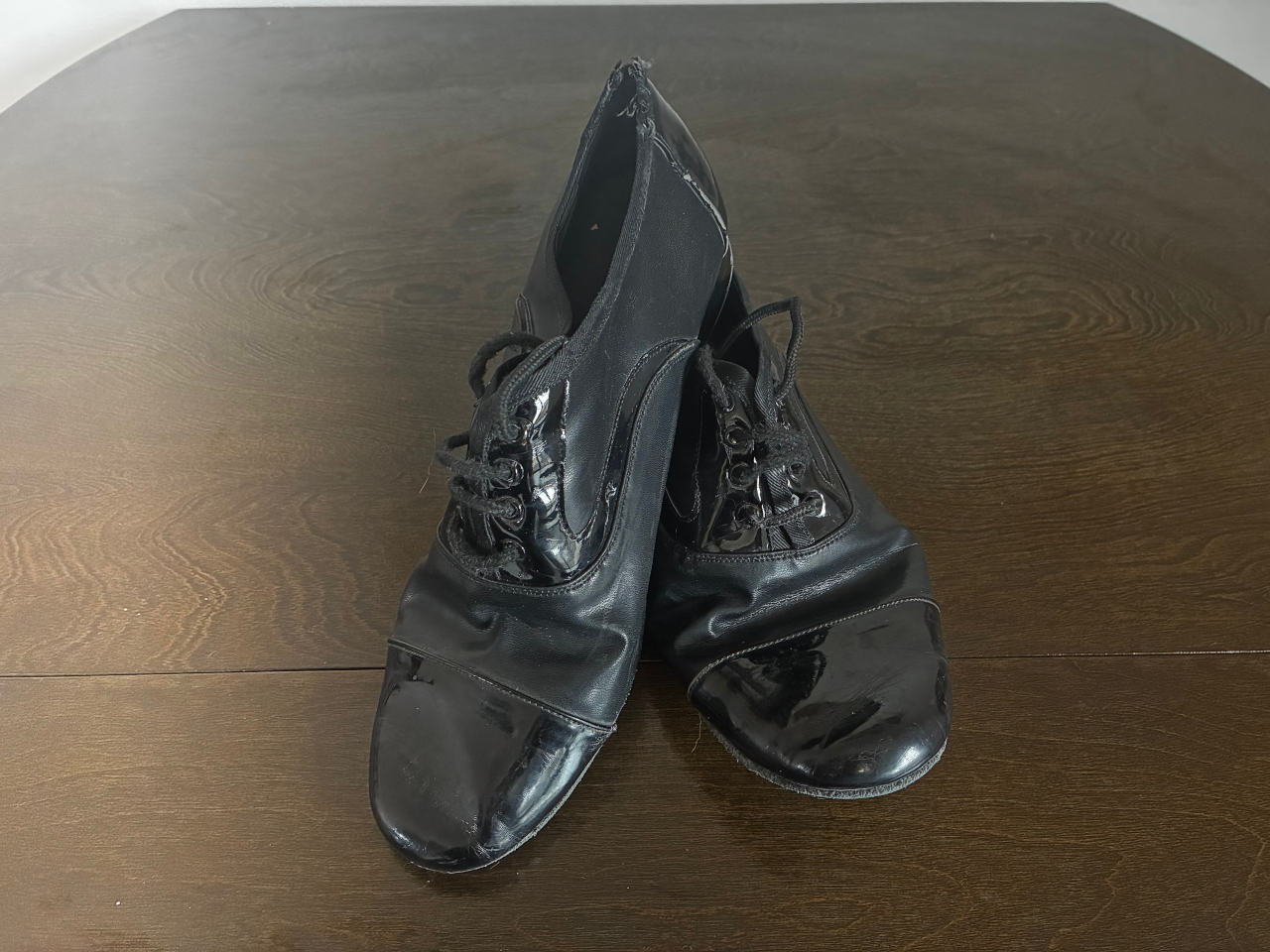
Another important consideration of a multi-panel shoe design is each panel’s materials. With a multi-panel design, you can mix and match different leathers to influence how to shoe stretches over time. My second pair of shoes were a multi-panel design with a patent leather toe box. What these shoes ended up doing was the sides of the shoe stretched, but the toe box did not. Now, whenever I wear these shoes as a shoe for social dancing on sticky or abrasive floors, the toe fits well, but the sides have become a looser fit.
The Design of the Fastener
One of the considerations of dance shoe design that impacts how a shoe stretches over time is the fastener. For women’s ballroom shoes, the fastener is often a strap. For designs with a strap, the strap itself will stretch, resulting in using increasingly tighter eyelets to compensate the stretch. At some point, you may need to invest in a leather hole-punch to add new eyelets to the strap.
For men’s ballroom dance shoes, the fastener is often a set of laces. Because laces cinch the shoe tight, they are pulling the the sides of the shoe upwards and over the top of your foot. This causes an upward stretch in the material. This is most notable when the eyelets themselves stretch, resulting in bigger holes where the laces are threaded through the shoe.
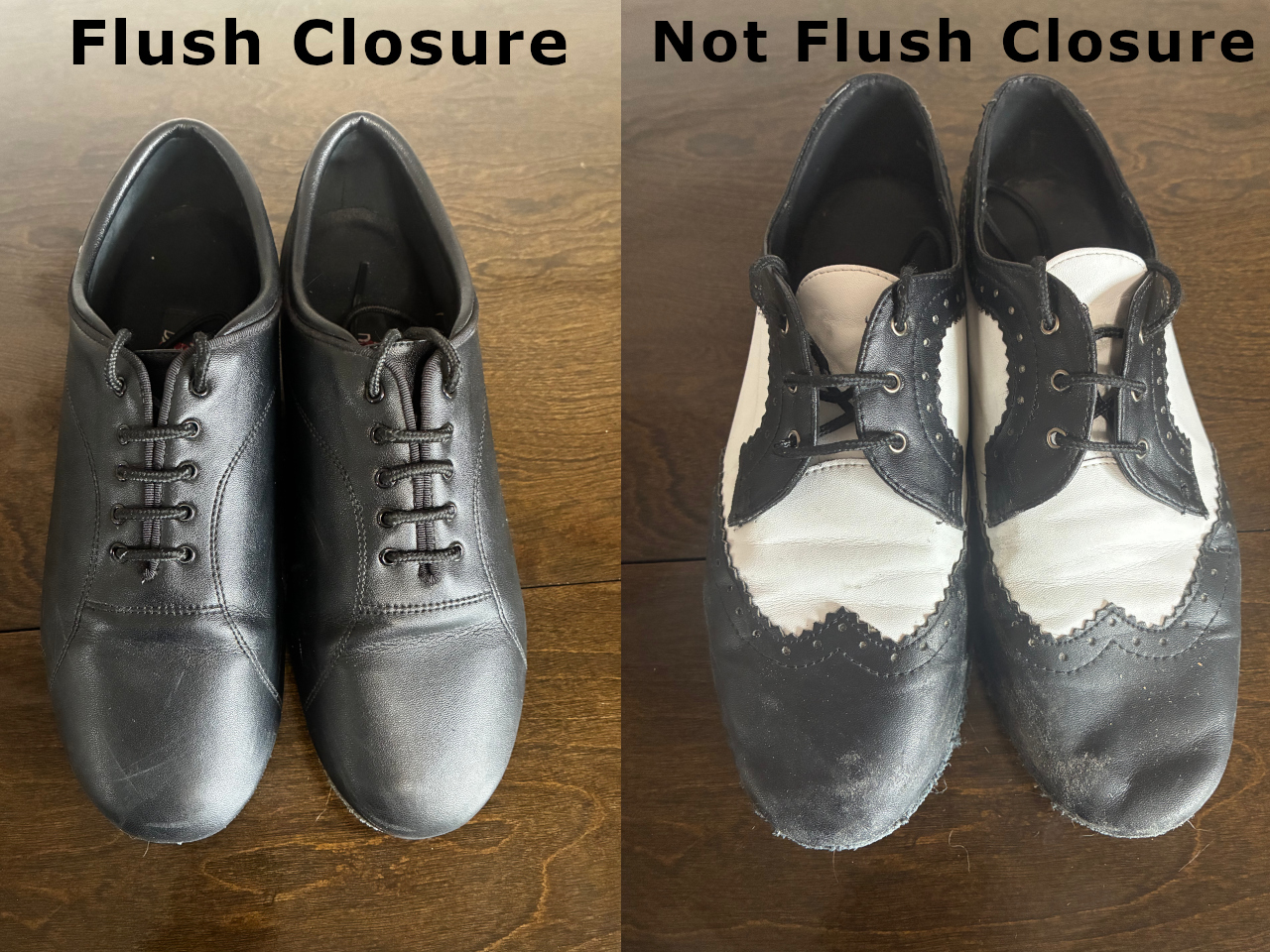
A laced shoe with a closure with edges that sit flush against each other will have less tension when cinching the shoe tight, and stretch the sides slower. However, a closure with edges that aren’t flush with each other will put more pressure on the sides when cinching tight because the edges don’t stop each other. However, the additional space between the edges of the closure contribute to longevity because there is more room for the leather to stretch before it becomes too loose to cinch any tighter.
Conclusion
This article went over how the materials and design of a shoe contributes to why leather dance shoes stretch. The materials determine whether and how much the shoe will stretch. Animal hide leather will stretch the most, followed by plant-based leathers, and synthetic leathers with the least amount of stretch. The number of panels and how the closure and fastener is designed determines in what ways the shoes will stretch, with the more panels and closure types directly contributing to how the leather stretches. And finally, a combination of materials and panels can result in a long-lasting, comfortable fit, when properly implemented.
Affiliate Disclosure: Dancewear Labs uses affiliate links. When you make a purchasing using one of our links, we earn a small commission at no additional cost to you.